A First Proper Piece: Choosing Jewellery for a Daughter at 16, 18 and 21
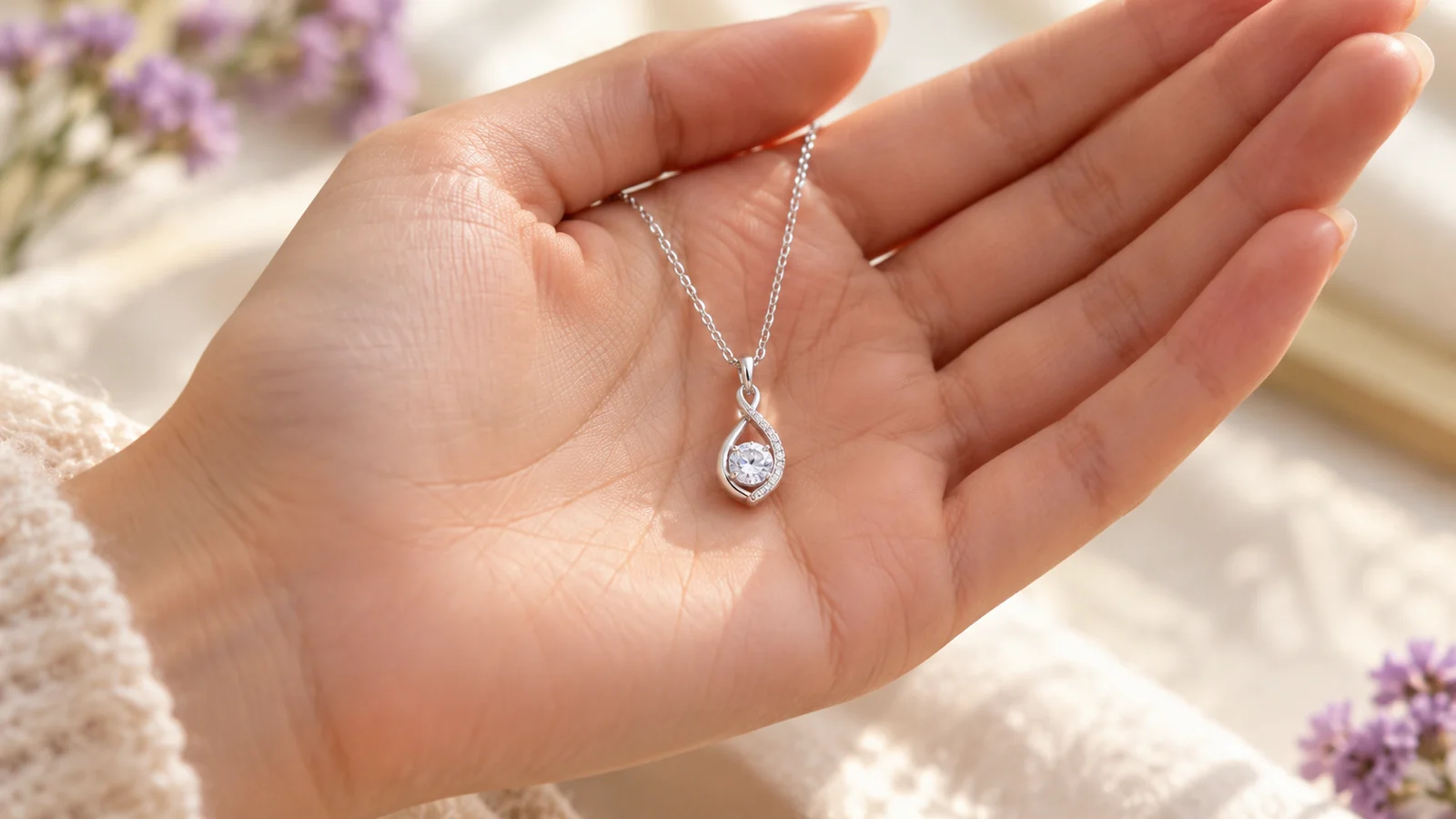
There is a particular kind of nervousness about buying a daughter her first proper piece of jewellery. The gift is meant to last, which means it has to be chosen for the adult she is becoming rather than the teenager standing in front of you — and it also has to survive school, sport and a drawer she does not tidy. This guide works through the three British milestones that usually prompt the purchase, what suits each one, how to get the fit right when a finger is still changing, and how to turn one gift into something you can add to for years.
Sixteen, eighteen and twenty-one are not the same occasion
They get lumped together as birthdays, but they mark genuinely different moments, and the gifts that land well are different too.
Sixteen arrives in the middle of exams and the first serious decisions about what comes next. It is the age at which a lot of young women start wearing jewellery deliberately rather than decoratively — picking something because it is theirs. The gift that works here is wearable every day: light, unfussy, not so precious it has to live in a box. Anything too grand at sixteen gets admired, photographed and put away.
Eighteen is the legal threshold, and it carries the most weight of the three. This is the natural point for the piece that is meant to be kept — something with a little substance, chosen to still look right in a decade. It is also the age at which engraving stops feeling like a novelty and starts feeling like a record.
Twenty-one has no legal meaning left in Britain, which is precisely why it survives as a sentimental one: the old "key of the door" birthday, often marked more formally than eighteen. By twenty-one you usually know her taste properly, because she has one. The gift can be more specific and less safe — a style you have seen her reach for rather than a style that suits everyone.
Across all three, think of it as a sequence: something she can live in at sixteen, something she keeps at eighteen, something that suits the particular person at twenty-one.
Ring or pendant for a first serious piece
This is the real fork in the road, and the honest answer is that a pendant is the safer gift and a ring is the more meaningful one.
A pendant or a fine chain needs no measurement. Chain length is adjustable in a way finger size is not, it suits any build, and it can be worn under a school shirt without comment. If you are unsure of her taste, or buying at a distance, or want to avoid any conversation about sizing before the day, a pendant removes almost all of the risk.
A ring carries more significance, and most people know it. It is also the piece most likely to need altering, most likely to be taken off and lost, and most sensitive to fit. If you want to give a ring, give it knowingly: plan for the sizing, and pick a design that can be adjusted later.
Worth considering alongside both:
- Stud earrings — practical, allowed under most school rules where anything dangling is not, and easy to wear daily. Check she has pierced ears, which sounds obvious and is forgotten every year.
- A fine bracelet or bangle — attractive but the fiddliest to fit, and the item most likely to be caught on a bag strap or a desk. An adjustable chain bracelet is far more forgiving than a rigid bangle.
- A locket — old-fashioned in the best sense, and it gives a sixteen-year-old something to do with the gift.
Sizing a ring for someone still growing
Finger size at sixteen is not finger size at twenty-five, and the temptation is to buy large and hope. Resist it: a loose ring is lost, not grown into.
Measure properly instead. Take a ring she already wears, note which hand and which finger it belongs on, and have a jeweller read it on a tapered steel mandrel — that takes two minutes and removes all guesswork. If you cannot borrow a ring, a strip of paper about five millimetres wide, wrapped round the base of the finger and then worked back over the knuckle while still wrapped, gives you a circumference you can hand to a jeweller to convert. Do not use string, which tightens unevenly, and do not use a flexible tape across the inside of a ring, which will not sit flat.
Some practical points that matter more at this age than any other:
- Measure at the end of a normal day, at room temperature. Fingers are fuller when warm and after exertion, and slimmer when cold. A measurement taken on a January morning will produce a ring that is tight by the summer.
- Size to clear the knuckle, not just the base. If her knuckle is noticeably wider, a jeweller can fit sizing beads or a sprung insert inside the band so the ring passes over and then stops spinning.
- Buy a design that can be altered. A plain, even band in silver or gold is simple work. A band set with stones all the way round, or one with a pattern or engraving running across the shank, generally cannot be resized cleanly.
- Half sizes exist and they matter. The British scale runs through the letters of the alphabet with a half size between each pair, and a half size is often the difference between a ring that sits and one that turns.
- A wide band fits tighter than a fine one of the same stated size. Allow roughly half a size more for anything noticeably broad.
If the ring is a surprise and you cannot get a measurement at all, choose a plain band, keep the receipt, and hold off on any engraving until she has tried it on — engraved pieces are far harder to return or exchange.
Silver, skin and sensitivity
A fair number of young women discover a reaction to cheap jewellery somewhere around this age, usually from nickel in low-grade alloys, plating and earring posts. This is not a reason to be anxious about a gift, but it is a reason to choose the metal deliberately.
Sterling silver is 925 parts silver per thousand, the remainder usually copper, and it is a sensible default: durable enough for daily wear, and nickel is not a standard part of the alloy. Where nickel tends to appear is in the small components — clasps, hinges, earring posts, spring parts — and in plated costume pieces rather than solid silver ones. Jewellery sold in the UK is subject to legal limits on how much nickel may be released onto the skin, with a stricter limit for posts placed in a fresh piercing than for items in ordinary contact, and "nickel-free" on a label means release below the permitted limit rather than literally no nickel present. Ask about the fittings specifically, not just the main metal.
Beyond metal, two practical habits keep silver looking well: put jewellery on last after perfume, hairspray and moisturiser, and take it off first. Silver tarnishes because sulphur compounds in the air react with its surface, and cosmetics, chlorine and sea water all accelerate it. Tarnish is a surface change, not damage, and it comes off with a soft cloth.
What survives school, sport and the pool
A first piece needs to cope with a life that is harder on jewellery than yours probably is.
- Chlorinated water is the worst offender. Pool chemistry dulls silver quickly and can attack the solder joints in a chain. The habit to teach is simple: it comes off before swimming, every time.
- Sport and PE. Most schools and clubs require jewellery to be removed for games, so anything she will be taking off twice a week needs a clasp she can manage in a hurry and a safe pocket in her bag. This is a strong argument for studs over hoops and for a sturdy bolt ring or lobster clasp over a fiddly spring.
- School rules. Many uniform policies permit a single pair of small studs and a watch and little else. It is worth a glance at the policy before buying something she cannot wear five days a week.
- Chain construction. A fine box or trace chain looks delicate because it is; a slightly heavier gauge survives being pulled over a head in a hurry. Snake chains kink and rarely recover.
- Settings. Stones in rub-over or bezel settings, where metal surrounds the stone, snag far less on jumpers and bags than raised claw settings, and lose stones less often.
Give the gift with a soft pouch or a small box and a cloth. It sounds like an afterthought; it is the difference between a piece still worn at twenty-five and one tangled at the back of a drawer.
Engraving and dates
Engraving turns a nice object into a specific one, and at eighteen in particular it is usually the right call. A few things to know before you commit:
- Space is the constraint. On the inside of a ring you have very little room, and the narrower the band the less there is. Initials and a date are reliable; a sentence is optimistic.
- Machine engraving is neat and shallow; hand engraving is deeper and holds up better to years of wear against skin. Ask which you are getting.
- Write dates out unambiguously. A numeric date can be read two ways depending on which side of the Atlantic the reader is on. The month in letters avoids the problem permanently.
- Engraving usually forfeits your right to return the piece. Personalised goods are normally excluded from the statutory cancellation rights that apply to things bought at a distance, so confirm the size and the choice first and engrave second.
- Allow time. Engraving adds days to an order, and more in December.
Building on it in later years
The cleverest thing you can do with a first piece is make it the start of something, so the following birthdays are easy.
Buy a good chain at sixteen and you can give a pendant at eighteen that hangs on it. Give a charm bracelet and every subsequent occasion has an obvious and welcome answer. Give a plain band and a second one later stacks beside it. Choose one metal and stay with it, so that later additions sit comfortably together rather than competing.
Keep a note somewhere of her measured ring size, the chain length she liked and whether she wears silver or yellow metal. In four years' time you will be very glad you wrote it down.
Sources
- The Goldsmiths' Company
- National Association of Jewellers
- Health and Safety Executive — UK REACH
- British Association of Dermatologists
- GOV.UK — accepting returns and giving refunds
- Citizens Advice